 |
|
Stony Ridge
Telescope Makers |
|
**********
|
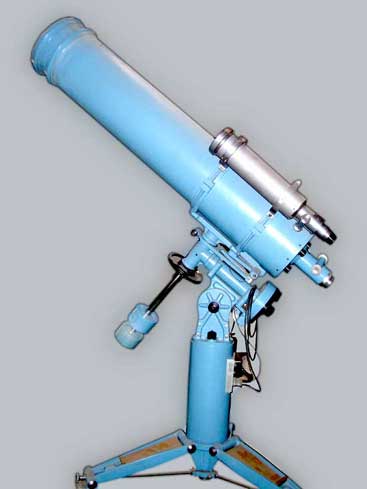
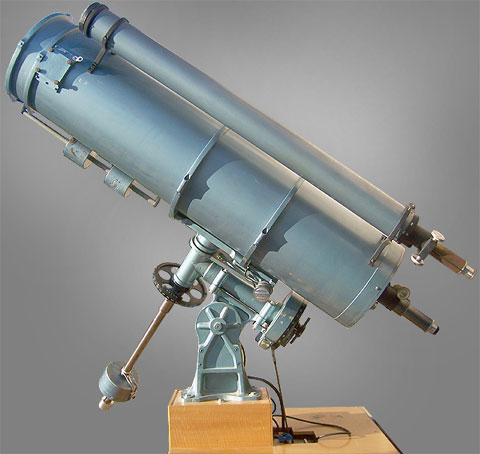
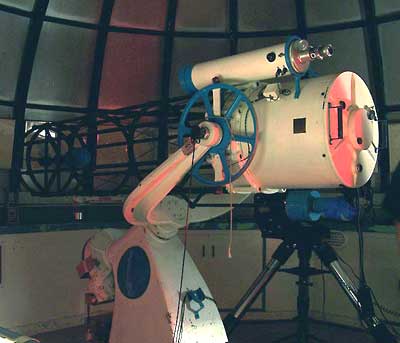
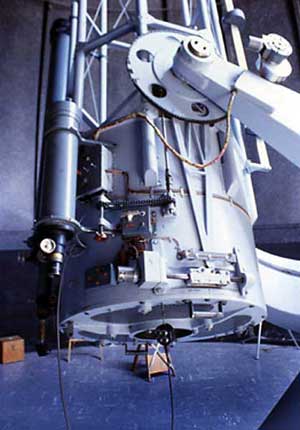
********** Below: A 12-inch Cassegrain built by George Carroll. This telescope is housed in a private observatory in Escondido, CA. |
 |
 |
|
**********
|
|
|
**********
|
 |
|
|
|
**********
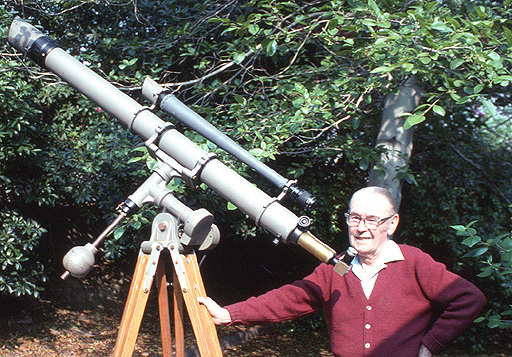
Above: A very early (1949?) Carroll 4-inch refractor with it's original owner Les Mawhinney, former president of the Los Angeles Astronomical Society (LAAS). Les donated the telescope to the LAAS in 1976. It was relocated to the Society's dark sky site in Lockwood Valley. Photo by Mike O'Neal. Right: The builder, George Carroll with the LAAS scope at the Riverside Telescope Makers Convention (RTMC) in 1980. This telescope was used and tested by two optics experts, Tom Cave and Thomas Cragg, and judged to be one of the finest used by either, rivaling any Alvan Clark instrument of equal aperture. Lew Chilton, of the LAAS reported that the object glass from this scope was stolen within a year or two after the RTMC photo was taken.
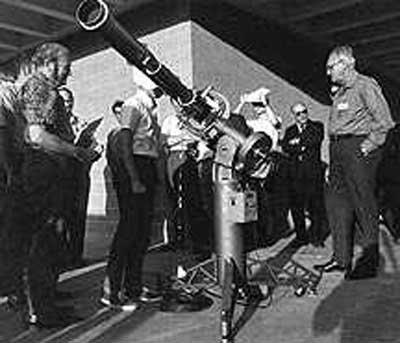
********** Below: George Carroll (far right) displays one of his solar telescope designs at the Riverside Telescope Makers' Convention (RTMC) in 1969.
|
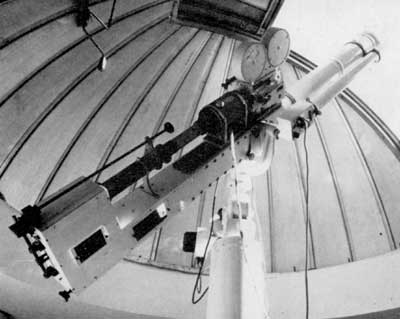
Above: George Carroll, designed and built this spar telescope for solar studies at the University of Tel Aviv in 1969. Other spar telescopes were built and installed over Robinson Hall at the California Institute of Technology, and at the Lockheed Solar Observatory, the Big Bear Solar Observatory, Ottawa River Solar Observatory, and perhaps others. |
|
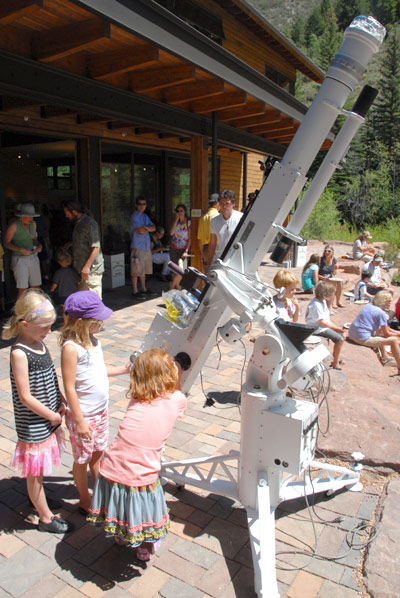
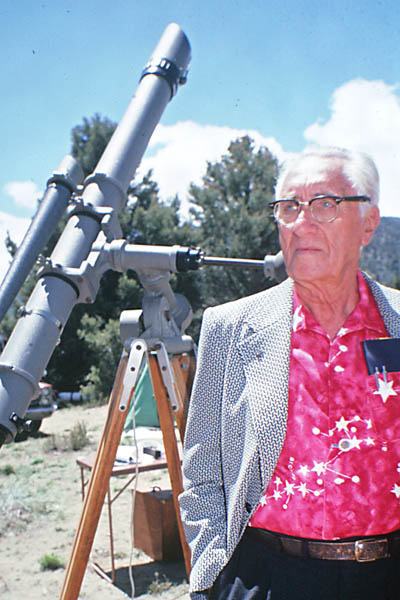
Right: This Carroll 5-inch solar spar telescope recently was on display at the public opening (August 20, 2011) of the new Walking Mountains Science Center in Avon, Colorado. It was designed and built by George Carroll at the Thomas Tool and Die Company, the company owned by Dave Thomas, Sr., another of Stony Ridge Observatory's Founding members. The telescope is equipped with interchangeable field lenses, including one with interchangeable solar occulting disks. This particular instrument was built in 1974 for the Hopkins Observatory at Williams College (Massachusetts) and dedicated to the memory of Charles J. Hardy, Jr., Chairman of ACF Industries and a member of the Williams College class of 1917. Presently being restored by John W. Briggs, this telescope will travel to the Mt. Wilson Observatory for observations of the transit of Venus in June, 2012. Photo courtesy of John W. Briggs
|
 |
|
|


|
webmaster@stony-ridge.org |